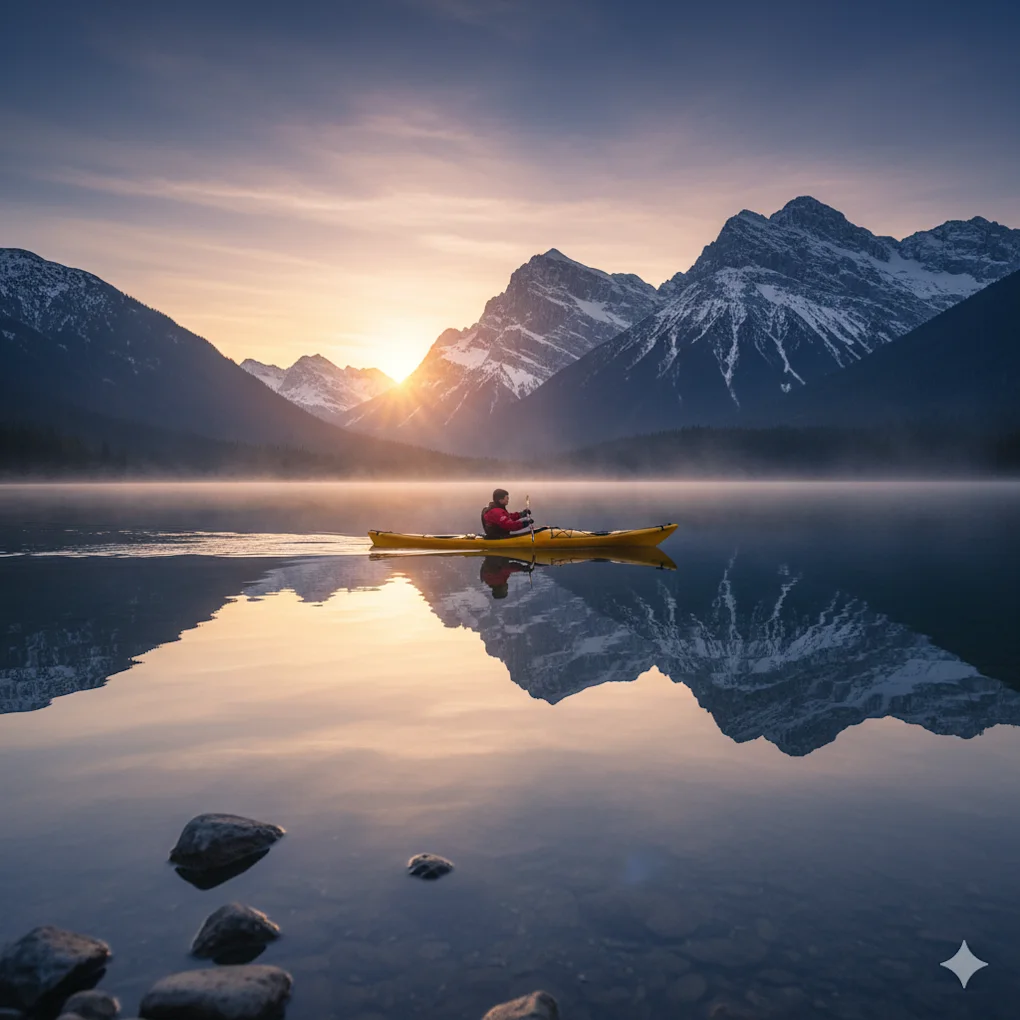
Your Ultimate Guide to Kayaking in Jackson, WY
The Complete Guide to Paddling Adventures in the Tetons
Planning your next kayaking adventure doesn't have to be overwhelming, especially when you're exploring waters surrounded by some of North America's most spectacular mountain scenery. Jackson, Wyoming, positioned at 6,237 feet elevation in the Teton Valley, offers kayaking experiences that range from peaceful lake paddling on crystal-clear alpine waters to technical river sections that challenge experienced whitewater kayakers.

Here's what makes Jackson interesting for kayaking: you're positioned in a destination where pristine alpine lakes provide some of the West's most scenic flatwater paddling, the Snake River offers progression from gentle floats to serious Class III-IV whitewater, and the surrounding wilderness creates opportunities for multi-day expeditions combining paddling with backcountry camping. Whether you're looking for serene morning paddles on mirror-calm lakes reflecting towering peaks, skill-building on beginner-friendly river sections, or challenging whitewater that tests advanced techniques, this guide will help you navigate Jackson's diverse paddling opportunities.

With access to Jenny Lake, String Lake, and Leigh Lake offering calm-water paddling through Grand Teton National Park, Jackson Lake's 25,000+ acres providing extended exploration opportunities, the Snake River system ranging from gentle Class I-II sections to technical Class III-IV whitewater, and wilderness areas accessible primarily by kayak, Jackson serves as an exceptional mountain kayaking destination. The region's cold, clear water, dramatic mountain backdrop, and relatively uncrowded conditions create ideal environments for kayakers seeking authentic alpine paddling experiences away from crowded lowland reservoirs.
ALPINE LAKE KAYAKING: Teton Reflection Paddling
Getting Started: Beginner-Friendly Lake Adventures
If you're new to kayaking or want to experience Jackson's scenery from the water without technical river skills, the Teton lakes provide some of the most spectacular and accessible flatwater paddling in North America. These crystal-clear alpine lakes offer calm water, stunning mountain views, and opportunities to paddle waters that remain remarkably pristine despite their accessibility.
String Lake represents the perfect introduction to Jackson kayaking. This narrow, shallow lake connects Jenny Lake to Leigh Lake, providing calm water ideal for beginners while offering spectacular views of Mount Moran (12,605 feet) and the Cathedral Group. The lake stretches approximately 1.5 miles long but remains narrow (typically 300-400 yards wide), creating sheltered paddling protected from wind.
String Lake's easy access from a dedicated boat launch, shallow depth (mostly 10-20 feet), and absence of motorboats create ideal learning conditions. The clear water allows you to see the rocky bottom and occasional trout, while the surrounding forest comes right to the shoreline. Water temperatures remain cold (typically 50-60°F even in summer) but the calm conditions and short distances make this manageable for kayakers wearing appropriate clothing.
Here's a pro tip: Launch at String Lake between 7:00-9:00 AM for the best conditions. Early morning brings mirror-calm water with spectacular reflections, minimal wind, and fewer other paddlers. The morning light on Mount Moran creates exceptional photography opportunities. By mid-morning, thermal winds develop and can create challenging conditions for beginning kayakers.
Jenny Lake offers the next step in Teton lake paddling with more open water, greater distances, and spectacular scenery. This 1,191-acre lake reaches depths of 256 feet and stretches 2.4 miles long, providing opportunities for extended paddling while remaining in protected alpine lake environment.
Jenny Lake presents more challenges than String Lake including:
Afternoon winds that can create 1-2 foot waves
Colder, deeper water (surface temps 45-55°F)
Greater distances from shore requiring stronger paddling skills
Motorboat traffic from the Jenny Lake shuttle service
However, the rewards include paddling along the base of the Teton Range's most dramatic peaks, access to Cascade Canyon views from water level, and opportunities to explore the lake's various bays and inlets. The east shore provides the most sheltered paddling, while the west shore beneath the peaks experiences more wind but offers the most spectacular views.
Leigh Lake extends north of String Lake, offering more remote and wilderness-character paddling. This 1.5-mile-long lake features dramatic mountain scenery including Mount Moran's north face, opportunities to spot wildlife (moose, bears, eagles), and access to backcountry campsites reachable only by water or long hiking.
Leigh Lake requires stronger kayaking skills than String Lake due to:
More exposure to wind creating larger waves
Greater distances (3+ miles round trip from String Lake)
Colder water from glacier sources
More remote location requiring self-sufficiency
The lake rewards experienced paddlers with solitude, exceptional wilderness character despite easy access, and opportunities for overnight kayak camping at designated backcountry campsites along the lakeshore.
Jackson Lake: Extended Alpine Paddling
Jackson Lake represents the region's largest body of water at 25,540 acres, stretching 15 miles long with numerous bays, inlets, and islands to explore. This massive alpine reservoir (created by Jackson Lake Dam) provides opportunities for serious kayaking expeditions, multi-day camping trips, and extended skill development.
Jackson Lake presents different challenges from smaller Teton lakes:
Wind exposure: The lake's size allows winds to generate significant waves (2-4 feet common in afternoon)
Cold water: Deeper water and glacier inputs maintain temperatures of 40-50°F even in summer
Distance: Crossing the main lake involves miles of open-water paddling
Motorboat traffic: Popular with powerboats creating wakes and traffic
However, the lake's size provides advantages including:
Multiple launch points allowing varied routes and circuits
Islands for exploration and camping
Protected bays offering shelter from wind
Spectacular scenery from different perspectives
Fishing access to remote locations
Colter Bay provides the most popular and accessible Jackson Lake paddling. The bay's protected waters, easy launch access, and campground proximity make this the starting point for most Jackson Lake kayaking. From Colter Bay, you can explore nearby islands, paddle to remote camping spots, or venture into the main lake when conditions allow.
Elk Island and other Jackson Lake islands offer excellent paddling destinations. These islands provide camping spots accessible only by boat, opportunities to circumnavigate for skill practice, and unique perspectives on the Teton Range. However, reaching islands requires crossing open water where conditions can deteriorate quickly—always check weather forecasts and be prepared to turn back if wind increases.
Lake Kayaking Safety and Conditions
Cold Water Immersion Risk: All Jackson-area lakes maintain dangerously cold water temperatures throughout the paddling season. Surface temperatures range from 40-60°F depending on lake depth, season, and recent weather. At these temperatures, sudden immersion causes:
Cold water shock (gasping reflex, hyperventilation)
Rapid loss of motor control (3-5 minutes)
Swimming failure (10-15 minutes)
Hypothermia (30+ minutes to hours depending on conditions)
ALWAYS wear appropriate clothing for immersion, not air temperature. Wetsuits or drysuits provide essential protection. Cotton clothing creates deadly risks in cold-water environments. Even warm summer days (70-80°F air) require protection because the water remains cold enough to cause rapid incapacitation.
Wind Development Patterns: Mountain weather creates predictable but dangerous wind patterns on Teton lakes:
Morning (6:00-10:00 AM): Typically calm with light or no wind
Midday (10:00 AM-2:00 PM): Winds begin developing as valley heats
Afternoon (2:00-6:00 PM): Strong winds common (15-25+ mph), creating 1-3 foot waves
Evening (6:00-9:00 PM): Winds typically diminish as temperatures cool
Plan lake paddling for morning hours. Afternoon wind can transform calm water into challenging conditions within 30-60 minutes. Kayakers caught far from shore in afternoon winds may struggle to return, particularly in shorter recreational kayaks with limited tracking ability.
Weather Monitoring: Mountain thunderstorms develop rapidly during summer afternoons. Lightning poses extreme danger to kayakers on open water with no shelter available. Always:
Check weather forecasts before launching
Monitor cloud development while on water
Return to shore immediately if thunderstorms threaten
Never paddle during electrical storms—lightning kills kayakers

RIVER KAYAKING: Snake River Progressions

Understanding Snake River Sections
The Snake River system through Jackson offers diverse kayaking opportunities ranging from gentle Class I-II float sections perfect for developing river skills to serious Class III-IV whitewater requiring expert technique. Understanding which sections match your skill level is critical—the river contains hazards that injure or kill unprepared kayakers every season.
Scenic Float Section (Jackson Lake Dam to Moose): This 10-mile section provides the easiest Snake River kayaking with Class I water, gentle current (2-3 mph), and spectacular Teton scenery. The section runs through Grand Teton National Park alongside the same route commercial rafting companies use for scenic float trips.
This section works well for:
Transition from lake to river kayaking
Developing basic river reading and eddy skills
Family paddling with experienced supervision
Photographers wanting to capture Teton scenery from water
However, even this gentle section requires:
Basic kayak control and maneuvering
Understanding of cold-water risks (42-48°F water)
Ability to handle occasional sweepers (fallen trees)
Self-rescue skills if you capsize
South Park to Hoback Junction: This intermediate section (approximately 8 miles) provides Class I-II whitewater introducing kayakers to wave trains, small holes, and more dynamic river features. The section remains forgiving with clear routes through rapids, multiple pools for recovery, and generally manageable consequences for mistakes.
This section is ideal for:
Building confidence after mastering flatwater kayaking
Learning to read water and choose routes through rapids
Practicing eddy turns and ferrying in current
Introducing whitewater concepts before harder rivers
Required skills include:
Solid flatwater kayaking foundation
Wet exit and self-rescue ability
Basic understanding of river features
Comfortable in moving current
Snake River Canyon (Hoback Junction to Sheep Gulch): This 16-mile section contains continuous Class II-III whitewater with several rapids approaching Class IV during high water. The canyon represents serious whitewater requiring intermediate to advanced skills, appropriate equipment, and understanding of swift-water hazards.
Major rapids include:
Lunch Counter: Long, powerful rapid with multiple routes, large waves (3-6 feet at high water), and significant holes requiring precise navigation
Rope: Technical rapid with strong hydraulics and potential for pinning against canyon walls
Kahuna: Wave train ending in large hole that flips kayaks during high flows
Champagne: Continuous wave train requiring sustained technique
This section demands:
Solid Class III kayaking experience
Roll or reliable self-rescue in moving water
Understanding of high-consequence environment (cold water, swift current, limited egress)
Appropriate whitewater kayak and safety gear
Advanced Sections (Astoria Hot Springs to Alpine): Below the main canyon, the Snake River continues with Class III-IV whitewater through more remote canyon. These sections attract expert kayakers but require:
Class IV kayaking proficiency
Scouting and decision-making skills
Self-sufficiency in remote environment
Understanding of high-water hazards
Kayak Types and Equipment for Jackson Rivers
Whitewater Kayaks: The Snake River Canyon and advanced sections require dedicated whitewater kayaks:
Creek boats (8-9 feet): High volume, stable, forgiving—best for learning canyon paddling
River runners (9-10 feet): Balanced performance, good for progression
Playboats (6-8 feet): Advanced boats for experienced paddlers wanting to play features
Crossover and Recreational Kayaks: These work for scenic float sections but are dangerous in whitewater:
Longer length (12-14 feet) makes them difficult to maneuver in rapids
Less rocker means they punch through waves rather than over them
Larger cockpits make wet exits harder and rolling nearly impossible
Not designed for impact with rocks
Never take recreational kayaks into Snake River Canyon whitewater. The cold water, technical rapids, and consequences of swimming make this extremely dangerous in inappropriate equipment.
Essential Safety Equipment:
Helmet: Mandatory for any moving water beyond gentle float sections
PFD (Type III or V): High-flotation whitewater-specific PFD, properly fitted
Spray skirt: Neoprene for cold water and reliability in rapids
Wetsuit or drysuit: Protection against cold-water immersion (CRITICAL)
Throw rope: For assisted rescue
Whistle: Emergency signaling
First aid kit: Waterproof container with wilderness first aid supplies
Skills Required for Snake River Kayaking
Beginner River Skills (Scenic Float Section):
Forward stroke with good technique
Sweep strokes for turning
Basic eddy turns in slow current
Wet exit and self-rescue
Recognition of simple river features
Intermediate Skills (South Park to Hoback):
Solid forward paddling in current
Reliable eddy turns and peel-outs in moderate current
Ferry angles for crossing current
Recognition of holes, waves, and channels
Bracing to prevent capsizing
Self-rescue including swimming position and reaching shore in current
Advanced Skills (Snake River Canyon):
Roll in moving water (or bombproof self-rescue)
Reading complex rapids and choosing routes
Boat scouting and backup plans
Precise boat angle and momentum control
Eddy-hopping through continuous rapids
Recognition of dangerous features (sieves, undercuts, hydraulics)
Group dynamics and river safety protocols
Expert Skills (Advanced Sections):
Reliable combat roll
Scouting from shore and understanding consequences
Technical moves in pushy water
Pin and entrapment avoidance
Swift-water rescue techniques
Self-sufficiency in remote environment
Water Levels and Seasonal Considerations
Peak Runoff (Late May - Early July): The Snake River runs at maximum flows during spring runoff, typically 4,000-8,000+ cfs in the canyon. These flows create:
More powerful rapids with bigger waves and stronger hydraulics
Faster current requiring quicker reactions
Higher consequences for mistakes
More debris (logs, branches) in the current
Extremely cold water (42-45°F)
Expert kayakers seek out high water for challenging conditions. Intermediate kayakers should avoid peak flows unless paddling with experienced mentors who know the river well.
Mid-Summer (July - August): Flows moderate to 2,000-3,500 cfs, creating more manageable conditions:
Clearer routes through rapids
Less powerful holes and waves
Warmer water (still cold at 48-55°F)
Better visibility in clear water
More time to read and react
This is the ideal season for intermediate kayakers building Snake River Canyon experience.
Late Summer (September): Water drops to 1,500-2,500 cfs, creating low-water conditions:
More rocks exposed requiring technical navigation
Smaller waves but more precise boat placement needed
Warmer water (55-60°F) but still hypothermia risk
Clearest water with visible river bottom
Less powerful but more technical
Late season suits experienced technical paddlers comfortable with rock navigation but may frustrate those wanting big water features.
Check Current Flows: The USGS maintains gauges providing real-time flow data:
Snake River at Jackson Lake Dam (station 13011000)
Snake River near Hoback Junction (station 13011500)
Flow data helps predict conditions. Research what flow levels match your ability—don't assume that because outfitters are running rafting trips, the river is appropriate for your kayaking skill level.
MULTI-DAY AND EXPEDITION KAYAKING
Extended Lake Expeditions
Jackson Lake Circuit Expeditions: Jackson Lake's size and designated campsites create opportunities for 2-5 day kayaking expeditions circumnavigating the lake or exploring its most remote sections. These trips combine kayaking with backcountry camping, fishing, and wilderness solitude.
Planning considerations include:
Permits: Backcountry camping in Grand Teton National Park requires permits ($45 for groups up to 6 people), available starting January 1 for the upcoming season
Campsites: Designated lakeside sites require reservations and fill quickly for peak summer dates
Weather: Multi-day trips must account for wind delays that may keep you storm-bound
Food storage: Bear-resistant containers required for all food and scented items
Water treatment: Lake water requires filtration or treatment despite clarity
Equipment: Kayaks must carry camping gear, food, water, and safety equipment
Island-to-Island Expeditions: Jackson Lake's islands provide excellent destinations for short multi-day trips (2-3 days). These expeditions offer spectacular camping without requiring enormous mileage if winds prevent travel.
Elk Island, Donoho Point, and other island campsites provide:
Unique camping locations accessible only by water
360-degree views of the Tetons
Opportunities to practice circumnavigation skills
Solitude despite relatively easy access
River Camping Trips
Snake River Multi-Day Sections: Experienced kayakers can plan multi-day trips combining river kayaking with streamside camping. The Snake River through Grand Teton National Park offers designated campsites accessible by river, while sections outside the park allow dispersed camping on gravel bars.
These expeditions require:
Advanced kayaking skills for loaded boats
Waterproof dry bags for camping gear
Understanding of river camping Leave No Trace principles
Ability to handle wind, weather, and changing water levels
Self-sufficiency for several days
Combination Trips: Creative expedition kayakers combine lake and river sections. For example:
Kayak Jackson Lake north to south (2-3 days)
Exit at the dam and continue down the scenic Snake River float (1 day)
Potentially continue into the canyon (expert-only with support)
These expeditions showcase Jackson's diverse paddling while maintaining reasonable safety margins through proper section selection.
Gear and Logistics for Expedition Kayaking
Kayak Selection for Expeditions: Multi-day trips require kayaks with adequate storage and stability for loaded weight:
Sea kayaks (14-17 feet): Best for lake expeditions with capacity for several days of gear
Touring kayaks (12-14 feet): Compromise between lake capacity and river maneuverability
Whitewater boats with float bags: Minimal storage but manageable for overnight river trips with ultralight gear
Dry Bag System: Waterproof storage is critical:
Large dry bags (30-65 liters): Sleeping bag, tent, clothing
Medium dry bags (10-20 liters): Food, cooking equipment
Small dry bags (2-5 liters): First aid, repair kit, valuables
Dry deck bags: Items needed during paddling (snacks, water, sunscreen)
Test all dry bags before the trip. Cheap dry bags leak, ruining sleeping bags and clothing in cold-water environments where staying dry is critical.
Food and Cooking: Lightweight backpacking food works well for kayak camping:
Dehydrated meals
Instant breakfast options
Energy-dense snacks
Bear-resistant container for storage
Pack stove systems (canister or alcohol stoves) rather than campfires, which are prohibited in some locations and challenging with limited dry wood in alpine environments.
Navigation and Communication:
Waterproof maps: Grand Teton National Park map and Snake River section maps
GPS device or phone in waterproof case: Navigation and emergency communication
VHF radio: Some expeditions in Grand Teton National Park warrant radio communication
Emergency communication: Consider satellite communicator (Garmin inReach, SPOT) for remote expeditions
SPECIALIZED KAYAKING EXPERIENCES
Whitewater Playboating and Freestyle
Lunch Counter Play Waves: The Snake River Canyon's most famous rapid contains several features suitable for freestyle kayaking and playboating. Experienced kayakers with solid Class III+ skills use these features to practice:
Surfing standing waves
Side-surfing holes
Cartwheels and other freestyle moves
Rolls and technique refinement
Playboating Lunch Counter requires:
Expert Class III kayaking skills
Reliable roll
Understanding of when to exit features
Respect for the cold water and consequences
Other Play Spots: Various Snake River rapids contain features for playing, though most require precise timing, solid skills, and respect for the environment. Local kayakers know specific features, water levels where they work, and access points.
Fishing Kayaks and Fly-Fishing Access
Snake River Fly-Fishing from Kayaks: The Snake River supports excellent fly-fishing for native Cutthroat trout and other species. Kayaks provide access to locations unreachable from shore:
Shallow gravel bars surrounded by deep current
Mid-river structure (boulders, drop-offs)
Banks with difficult wading access
Remote sections requiring boat travel
Fishing kayaks typically feature:
Greater stability than performance kayaks (important for casting and landing fish)
Rod holders and gear storage
Comfortable seats for extended periods
Anchor systems for holding position
Lake Fishing from Kayaks: Jackson Lake, Jenny Lake, and other Teton waters offer excellent fishing opportunities. Kayaks provide quiet approaches to fish compared to motorboats while accessing areas too deep for wade fishing.
Target species include:
Lake trout (Jackson Lake mackinaw to 40+ pounds)
Snake River Cutthroat trout
Brown trout
Brook trout (smaller lakes)
Photography and Wildlife Viewing from Kayaks
Wildlife Viewing Advantages: Kayaks provide unique wildlife viewing opportunities:
Quiet approach: Silent paddling allows closer approaches than motorboats
Low profile: Kayaks sit low on water, appearing less threatening to animals
Maneuverability: Access to shallow areas and tight spaces
Slow speed: Time to observe and photograph without pressure to keep moving
Target Wildlife:
Moose: Common along lake and river shorelines, particularly early morning
Black bears: Occasionally visible along Snake River and lake shores
Bald eagles and ospreys: Nesting along waterways, fishing visible from kayaks
Great blue herons: Wading and fishing in shallows
Trumpeter swans: Jackson Lake and wetlands
Otters: Swimming and playing in both lakes and rivers
Photography Considerations: Kayak photography requires:
Waterproof camera or housing
Secure storage when not shooting
Stability techniques (using paddle as outrigger)
Understanding of how boat movement affects images
Respect for wildlife (maintaining distance, not pursuing)
Ethical Wildlife Viewing: Kayaks' quiet nature creates responsibility:
Maintain recommended distances (25 yards from most wildlife, 100 yards from bears)
Never pursue or herd wildlife for photos
Avoid nesting or denning areas during sensitive periods
Give wildlife clear escape routes rather than trapping them against shore
Use long lenses rather than close approaches
KAYAK INSTRUCTION AND SKILL DEVELOPMENT
Learning Resources in Jackson
Jackson Hole Kayak School and Instruction: While Jackson lacks dedicated year-round kayak schools (due to short season and mountain focus), several outfitters and guide services offer instruction:
Rendezvous River Sports provides kayak instruction and guided trips focusing on skill development. Their programs include:
Intro to River Kayaking: Basic skills for moving from lake to river paddling
Intermediate Whitewater: Building skills for Snake River Canyon
Roll Clinics: Learning and refining combat rolls
Guided Skill-Building Trips: Instruction combined with supported paddling
Private Guide Services: Several experienced kayakers offer private instruction customized to your goals:
One-on-one or small group instruction
Flexible scheduling around your visit
Progression from current skills toward specific goals
Focus on Snake River-specific conditions and features
American Canoe Association (ACA) Courses: Some regional instructors offer ACA certification courses in Jackson, particularly:
ACA Level 1 Kayaking (introduction)
ACA Level 2 Kayaking (basic moving water)
ACA Level 3 Kayaking (intermediate whitewater)
These courses provide structured curriculum and nationally recognized certifications.
Self-Guided Skill Progression
Recommended Progression for Jackson Kayaking:
Phase 1 - Lake Foundation (5-10 hours):
Master forward stroke with good technique
Develop effective turning strokes (sweep, stern rudder)
Practice stability and bracing
Learn wet exit and self-rescue
Build comfort in kayak
Practice locations: String Lake, calm sections of Jenny Lake
Phase 2 - Moving Water Introduction (10-20 hours):
Eddy turns in gentle current
Ferry angles and crossing current
Reading water features (current, eddies, obstacles)
Self-rescue in moving water
Swimming safely in current
Practice locations: Snake River scenic float section, South Park to Hoback in low water
Phase 3 - Whitewater Foundation (20-40 hours):
Reliable eddy turns and peel-outs in rapids
Choosing routes through Class II rapids
Bracing in waves and turbulence
Rolling or bombproof recovery techniques
Reading complex rapids
Practice locations: South Park to Hoback section, upper Snake River Canyon at moderate flows with experienced mentors
Phase 4 - Advanced Whitewater (40+ hours):
Combat roll in difficult conditions
Boat scouting and route finding in Class III
Technical moves in pushy water
River rescue techniques
Group leadership and decision-making
Practice locations: Snake River Canyon at various water levels, regional Class III rivers
Skills Clinics and Workshops
Spring Clinic Season: Late May and June, when water levels are high and kayakers are shaking off winter rust, many regional kayakers organize informal clinics and practice sessions. Local paddling clubs and online forums (Mountain Project, regional Facebook groups) post information about these opportunities.
Roll Clinics: Most critical skill for advancing beyond Class II kayaking. Roll clinics typically occur in:
Heated pools (winter/spring)
Calm lake sections (String Lake in summer)
Gentle river sections with instruction and support
Learning to roll requires typically 4-8 hours of instruction plus significant practice. Budget time for this critical skill before attempting serious whitewater.
Rescue and Safety Courses: Swift-water rescue courses teach:
Self-rescue techniques
Assisted rescue (throw ropes, boat-based rescue)
Entrapment scenarios
Group safety protocols
These skills are critical for anyone paddling beyond gentle Class I water and particularly important for those kayaking without professional guides.
SEASONAL KAYAKING CONSIDERATIONS
Summer Prime Season (July - August)
Summer provides Jackson's most comfortable kayaking conditions with:
Moderate water temperatures (relative term—still 48-60°F)
Warm air temperatures (70-80°F)
Long daylight hours (5:30 AM - 9:00 PM)
Stable weather patterns (though afternoon thunderstorms remain common)
Most outfitters and instruction available
Summer Challenges:
Afternoon winds on lakes (plan morning paddling)
Thunderstorm risks (monitor weather constantly)
Increased traffic from other paddlers and boaters
Mosquitoes and biting insects (particularly morning/evening near shorelines)
Tourist crowds at popular launch points
Optimal Summer Strategy:
Launch early (6:00-8:00 AM) for calm conditions and solitude
Finish lake paddling by noon before winds develop
Afternoon thunderstorm awareness (get off water if storms threaten)
Wetsuit recommended despite air temperature (water remains cold)
Shoulder Season Opportunities (June, September)
Early Season (June): Offers advantages and challenges:
Advantages: Peak runoff for big-water kayaking, fewer crowds, wildflowers, active wildlife
Challenges: Very cold water (42-48°F), high water levels requiring advanced skills, unpredictable weather, limited outfitter availability
June suits expert kayakers seeking high-water challenges. Beginning and intermediate kayakers should wait for mid-summer moderation.
Late Season (September): Provides excellent conditions:
Advantages: Stable weather, warm days, minimal wind, fall colors, solitude, clear water
Challenges: Cold nights, short season (many services close by month's end), low water reducing lake paddling appeal, technical low-water river navigation
September is ideal for experienced kayakers comfortable in all conditions and those seeking solitude over perfect water levels.
Winter Realities (October - May)
Jackson's kayaking season effectively ends by October as:
Water temperatures drop below 40°F (instantly incapacitating)
Air temperatures frequently below freezing
Ice forms on lakes and river margins
Daylight hours shrink dramatically
All recreational services close
A handful of expert kayakers with drysuits and extensive cold-water protocols paddle the Snake River through winter for training, but this is extreme kayaking requiring specialized skills and equipment. Winter is the off-season—Jackson's paddlers turn to skiing, not kayaiking.