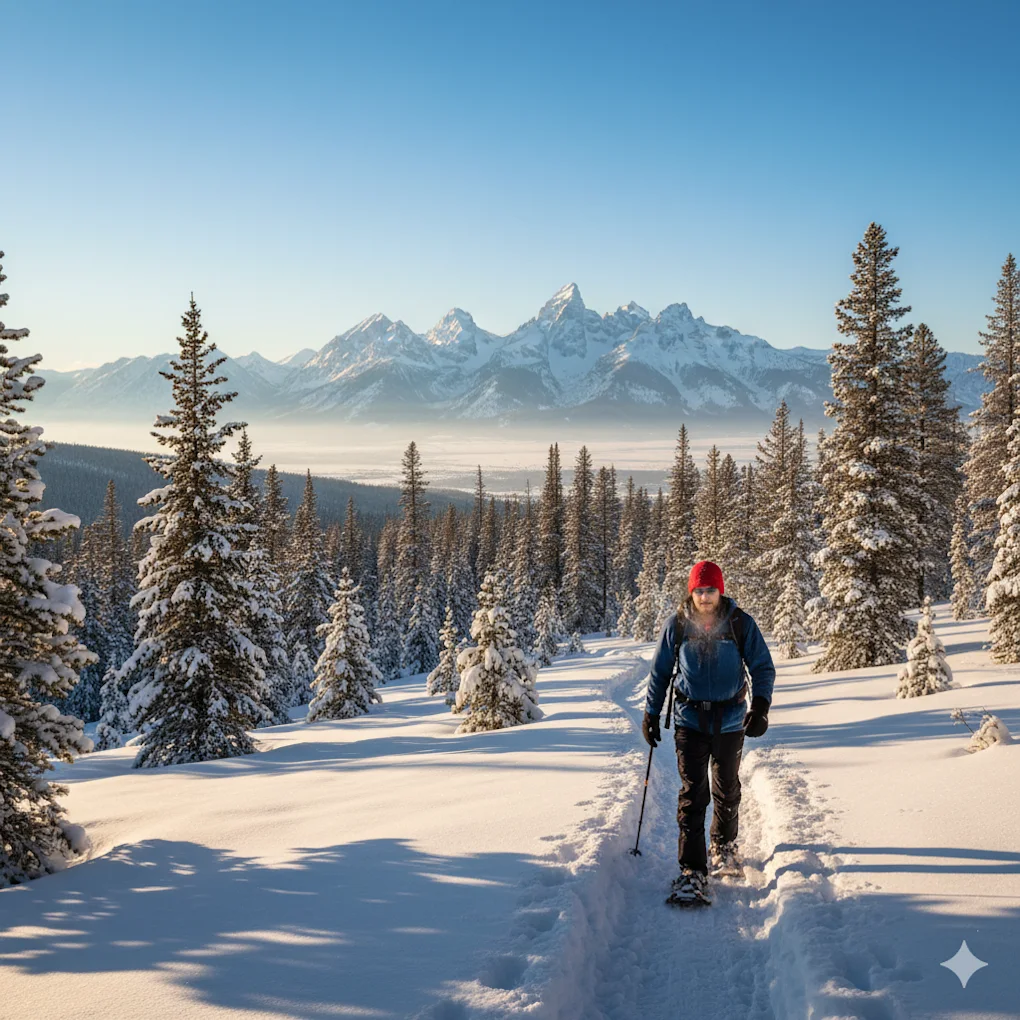
The Complete Guide to Winter Teton Adventures
Planning your winter outdoor adventure doesn't have to be overwhelming, especially when you're exploring one of America's premier mountain destinations during its most spectacular season. Jackson, Wyoming, transforms into a winter wonderland from December through March, offering snowshoeing experiences that range from gentle valley floor trails perfect for families to challenging backcountry routes requiring avalanche awareness and winter survival skills.

Here's what makes Jackson extraordinary for snowshoeing: you're positioned at 6,237 feet elevation in a valley receiving 400+ inches of snow annually in the surrounding mountains, with trails ranging from maintained pathways through the National Elk Refuge to wilderness routes accessing pristine winter landscapes. Whether you're seeking peaceful winter wildlife viewing while snowshoeing among thousands of elk, moderate trail adventures through snow-laden forests, or challenging backcountry expeditions requiring technical winter skills, this guide will help you explore Jackson's winter magic safely.

With access to the National Elk Refuge's winter wildlife spectacle viewable from snowshoe trails, Grand Teton National Park's snow-covered landscapes, hundreds of miles of backcountry terrain in surrounding national forests, and professional guide services offering instruction and safety oversight, Jackson delivers world-class winter recreation. The region's reliable snow, spectacular scenery, and diverse terrain create conditions ideal for snowshoers of all experience levels while maintaining authentic wilderness character.
GETTING STARTED: Winter Wildlife and Valley Trails

National Elk Refuge: Wildlife Viewing on Snow
The National Elk Refuge provides Jackson's most accessible and spectacular winter snowshoeing experience. Every winter, 5,000-7,500 elk migrate from high country to this 25,000-acre refuge, creating North America's largest elk concentration viewable on foot via snowshoe trails.Refuge Snowshoe Trails offer maintained routes allowing wildlife viewing while protecting elk from disturbance:
Flat terrain suitable for complete beginners
2-5 mile route options
Spectacular Teton backdrop
Opportunities to observe elk, bison, bighorn sheep, wolves (occasionally)
No avalanche risk or technical navigation required
The refuge typically opens to snowshoers in December once adequate snow accumulates and elk have migrated to winter range. Routes keep appropriate distance from elk herds (minimum 50 yards) while providing excellent viewing and photography opportunities.Wildlife Viewing Ethics: The elk are stressed during winter, surviving on limited food reserves. Responsible snowshoers:
Stay on designated routes
Maintain minimum distances
Never pursue or herd wildlife
Keep dogs leashed or leave them home
Move slowly and quietly
Winter Wildlife Beyond Elk: The refuge and surrounding areas support diverse winter wildlife including:
Bison (several hundred winter in refuge)
Bighorn sheep (on nearby slopes)
Bald eagles (hunting on the refuge)
Coyotes and foxes (following elk herds)
Occasional wolves (dispersing from Yellowstone)
Cache Creek and Town-Adjacent Trails
Cache Creek Trail provides Jackson's most popular and accessible snowshoe trail just minutes from downtown. This maintained winter recreation trail offers:
Gradual elevation gain through aspen and conifer forest
6-8 mile round trip options (turn around whenever desired)
Spectacular views opening up as you gain elevation
Shared use with cross-country skiers (stay to side of ski tracks)
Easy access and parking
Cache Creek serves as an excellent introduction to mountain snowshoeing with minimal avalanche risk on the standard lower trail. The route follows the summer trail system but takes on magical character under deep snow with ice formations along the creek and snow-laden trees creating winter beauty.Snow King Resort Area Trails provide steep terrain training close to town:
Josie's Ridge Trail: Challenging climb with outstanding views
Snow King summit access (when avalanche conditions allow)
Good workout in limited time
Avalanche terrain on upper sections requires awareness
Teton Pass Nordic Trails
Trail Creek Nordic Trails at Teton Pass (8,400 feet elevation) offer maintained trail systems specifically for Nordic skiing and snowshoeing:
Groomed tracks for skiing (snowshoers use separate paths alongside)
15+ km of maintained trails
Beautiful high-elevation terrain
Reliable snow throughout winter
Mountain lodge with warming hut and restrooms
The nordic center provides excellent introduction to higher-elevation snowshoeing in relatively controlled environment with maintained trails, other users providing safety, and nearby facilities for warming.
GRAND TETON NATIONAL PARK: Winter Wilderness
Park Winter Access and Conditions
Grand Teton National Park transforms into a winter wilderness when snow closes most roads from November through April. This creates exceptional snowshoeing opportunities for those prepared for serious winter conditions:
Accessible Winter Areas:
Taggart Lake Trail: 3-mile round trip to frozen lake
Jenny Lake area: Various routes along lakeshore and into canyons
Phelps Lake: 4-mile round trip overlooking frozen lake
Cunningham Cabin: Flat historic area snowshoeing
Winter Park Realities:
No plowed roads beyond Moose (except to Flagg Ranch north of park)
Facilities closed except basic restrooms at Moose
Self-sufficiency mandatory
Avalanche terrain in most canyon and mountain areas
Extreme cold (-20°F to 20°F typical)
Complete winter preparedness required
Beginner-Friendly Park Routes
Taggart Lake Trail (3 miles round trip, 400 feet elevation gain): Starting from the Taggart Lake trailhead, this route provides manageable introduction to park winter conditions while showcasing spectacular scenery. The trail follows moderate grades through forest opening to views of the frozen lake with the Cathedral Group rising dramatically above.Winter considerations:
Trailhead access via plowed Teton Park Road to Moose
Route-finding easier when following others' tracks
Can be icy requiring traction devices beyond snowshoes
Exposed sections experience strong wind
Turn-around flexibility for weather or fatigue
Phelps Lake Overlook (4 miles round trip, 600 feet elevation gain): This trail climbs through forest to spectacular overlook of frozen Phelps Lake far below with Death Canyon beyond. The route provides excellent introduction to steeper grades and higher elevation while remaining below avalanche terrain.
Winter highlights:
Spectacular overlook views
Protected forest travel
Appropriate challenge for progressing beyond flat valley trails
Lower avalanche risk than canyon routes
Good wildlife habitat (moose, elk, occasional wolves)
Advanced Winter Park Snowshoeing
Cascade Canyon Winter Access requires advanced winter skills:
Avalanche terrain throughout canyon
9+ mile round trips
Navigation challenges in deep snow
Serious commitment in remote winter environment
Proper avalanche safety equipment mandatory (beacon, shovel, probe)
Only experienced winter travelers with avalanche training should venture into Teton canyons. The spectacular scenery attracts people beyond their skill level—numerous rescues and fatalities occur in these areas during winter.
BACKCOUNTRY AND WILDERNESS SNOWSHOEING
Bridger-Teton National Forest Access
The national forests surrounding Jackson provide hundreds of square miles of winter wilderness accessed primarily by snowshoe or ski. These areas offer true wilderness experiences but demand complete winter competence:
Granite Creek Area:
Hot springs destination (13 miles round trip from winter closure)
Gradual approach along snow-covered road
Soaking in natural hot pools as reward
Multi-day trip or very long day
Avalanche terrain on surrounding slopes
Gros Ventre Wilderness:
Remote winter wilderness east of Jackson
Multi-day expeditions only
Serious avalanche terrain
Wildlife winter range (travel restrictions apply)
Complete self-sufficiency required
Snake River Range:
South of Jackson accessing Idaho border ranges
Varied terrain from mellow to extreme
Excellent tree skiing/snowshoeing
Remote with limited rescue access
Avalanche Awareness and Safety
Avalanche Reality: The Teton region experiences serious avalanche hazard throughout winter. Most backcountry terrain involves avalanche risk requiring:
Essential Avalanche Knowledge:
Formal avalanche education (Level 1 minimum for backcountry travel)
Daily avalanche forecast checking (Bridger-Teton Avalanche Center)
Terrain assessment and route selection skills
Recognition of red flags (recent loading, wind, warming)
Conservative decision-making
Required Safety Equipment:
Avalanche transceiver (beacon) - worn properly, practiced with
Avalanche probe - for locating buried victims
Snow shovel - metal blade, extendable handle
First aid kit - wilderness-appropriate
Communication device - cell phone limited, satellite messenger recommended
Emergency shelter - bivy sack or emergency blanket minimum
When to Avoid Backcountry:
Avalanche danger rated "Considerable" or higher without expert skills
Recent significant snowfall (12+ inches in 24 hours)
Rapid warming or rain on snow
Strong winds loading leeward slopes
Any uncertainty about conditions or abilities
The mountains will be there tomorrow. Conservative decisions prevent tragedies.
WINTER CAMPING AND MULTI-DAY TRIPS
Overnight Winter Snowshoe Adventures
Multi-day winter trips combine snowshoeing with winter camping, creating immersive wilderness experiences. These expeditions require substantial additional skills:Winter Camping Skills:
Four-season tent setup in wind and snow
Snow anchors for tent stability
Sleeping systems rated to expected temperatures (-20°F or colder)
Winter cooking and melting snow for water
Preventing equipment freeze-up
Cold weather first aid
Suitable Locations for Winter Camping:
Grand Teton National Park backcountry (permit required)
Bridger-Teton National Forest (dispersed camping allowed)
Granite Creek area
Lower-angle forest areas away from avalanche terrain
Equipment Considerations:
Heavy loads (40-60+ pounds with winter gear)
Larger snowshoes or skis to support weight
Sleds for gear hauling (pulk sleds)
Significantly more fuel for melting snow
Redundant critical systems (sleeping insulation, fire-starting)
Winter camping separates genuine winter mountaineers from recreational snowshoers. Don't attempt overnight trips without extensive day trip experience, proper training, and tested equipment.
GEAR AND EQUIPMENT

Snowshoe Selection
Recreational Snowshoes (21-25 inches):
Best for: Flat to moderate terrain, maintained trails, beginners
Flotation for 150-250 pounds (user plus pack)
Simple binding systems
Cost: $100-200
Mountain Snowshoes (25-30 inches):
Best for: Steep terrain, backcountry, heavier loads
Aggressive crampons for ice and hard snow
Heel lifts for climbing
Cost: $200-400
Backcountry/Mountaineering Snowshoes (30-36 inches):
Best for: Deep powder, heavy loads, expedition travel
Maximum flotation
Technical crampon systems
Durable for harsh conditions
Cost: $300-500
Jackson-Specific Recommendations: For Jackson conditions (deep powder, steep terrain, cold), choose mountain snowshoes minimum. The extra investment provides better performance and safety in serious winter conditions.
Clothing and Layering Systems
Base Layer (next to skin):
Merino wool or synthetic (NEVER cotton)
Lightweight to midweight depending on activity level
Top and bottom
Insulation Layer:
Fleece or synthetic puffy jacket
Adjustable based on exertion and weather
Pack extra insulation for stops/emergencies
Shell Layer:
Waterproof/breathable jacket and pants
Wind protection critical in exposed terrain
Pit zips and vents for temperature regulation
Extremities:
Insulated winter boots (rated to -20°F minimum)
Multiple glove/mitt options (liner gloves, insulated mittens, shell mitts)
Warm hat and balaclava
Neck gaiter or face protection
Goggles and sunglasses (both needed)
Jackson Winter Reality: Temperature swings of 40-50°F occur during single days. Layer systems must handle:
Morning starts at -10°F
Midday sun and exertion at 25°F
Evening return to 0°F
Sudden weather changes
Safety and Emergency Equipment
Required for All Trips:
Headlamp with extra batteries (short winter daylight)
Fire starting supplies (waterproof matches, lighter, tinder)
Emergency shelter (bivy or space blanket minimum)
First aid kit (cold-weather specific)
Extra food (high calorie)
Extra clothing (full spare layer)
Map and compass (GPS as backup, not primary)
Whistle
Multi-tool
Communication:
Cell phone in waterproof case (limited coverage)
Satellite communicator (inReach, SPOT) for backcountry
Knowledge of who to call and what to say
GUIDED TRIPS AND INSTRUCTION
Professional Guide Services
Hole Hiking Experience offers guided snowshoe trips:
Half-day and full-day options
National Elk Refuge wildlife tours
Grand Teton National Park excursions
All equipment provided
Naturalist interpretation
Cost: $125-200 per person
Jackson Hole Mountain Guides provides advanced options:
Backcountry snowshoe tours
Avalanche awareness integration
Winter camping expeditions
Technical terrain access
Cost: $200-400+ per person depending on experience
Benefits of Guided Trips:
Local knowledge of conditions and routes
Safety oversight and emergency response capability
Equipment provision
Wildlife and natural history interpretation
Social experience with other participants
Learning Winter Skills
Avalanche Education:
AIARE Level 1: 3-day course covering avalanche basics ($395-495)
AIARE Level 2: Advanced decision-making (requires Level 1)
Rescue courses: Practice beacon searching and rescue techniques
Winter Camping Courses:
NOLS winter camping: Multi-day courses teaching complete winter skills
Local guide services: Custom instruction
Mountaineering clubs: Peer learning opportunities
Self-Study Resources:
Books: "Avalanche Essentials," "Mountaineering: Freedom of the Hills"
Online: Avalanche.org, Bridger-Teton Avalanche Center forecasts and education
Practice: Skills clinics and mentor relationships
SEASONAL CONSIDERATIONS AND TIMING
Early Season (November-December)
Conditions:
Snow accumulation building but potentially thin
Cold temperatures establishing snowpack
Short daylight hours (sunrise 7:30 AM, sunset 4:30 PM)
Elk migration ongoing (refuge access varies)
Best Activities:
Lower elevation trails as high country develops snowpack
Town-adjacent trails (Cache Creek)
Waiting for more snow in high country
Mid-Winter (January-February)
Prime Snowshoeing Season:
Deep snowpack established throughout region
Full elk presence on refuge
Coldest temperatures (-20°F to 20°F typical)
Shortest days but lengthening through February
Most stable weather patterns
Optimal Experiences:
National Elk Refuge wildlife viewing
Grand Teton National Park trails
Backcountry access (with proper avalanche assessment)
Winter camping conditions most predictable
Late Season (March-April)
Spring Transition:
Warming temperatures (20°F to 40°F)
Longer daylight (sunrise 6:30 AM, sunset 7:00 PM by April)
Increasing avalanche danger from warming
Elk beginning to disperse from refuge
Snowpack consolidation (sometimes icy, sometimes corn snow)
Activities:
Lower avalanche risk on conservative terrain
Pleasant temperatures for longer trips
Wildlife viewing transitions as animals prepare for spring
Backcountry travel requires careful snow assessment
WINTER HAZARDS AND RISK MANAGEMENT
Cold Weather Injuries
Hypothermia:
Core temperature drops below 95°F
Symptoms: Shivering, confusion, slurred speech, lethargy
Prevention: Proper clothing, staying dry, adequate food intake, recognizing early signs
Treatment: Warm gradually, sweet drinks if conscious, emergency evacuation if severe
Frostbite:
Tissue freezing, typically extremities (fingers, toes, nose, ears)
Symptoms: Numbness, white/grey skin color, hard tissue
Prevention: Proper insulation, vapor barrier liner socks/mitts, staying active
Treatment: Gradual rewarming (NOT rapid), no rubbing, medical attention
Recognition and Response: Cold injuries progress quickly at Jackson temperatures. Monitor partners constantly and speak up about concerns immediately.
Navigation and Route-Finding
Winter Navigation Challenges:
Trails buried and invisible under snow
Landmarks obscured
Whiteout conditions eliminating visual references
Short daylight creating time pressure
Essential Skills:
Map and compass navigation without trails
GPS as backup (batteries fail in extreme cold)
Route planning with bail-out options
Time management accounting for slow travel in snow
Wildlife Encounters
Winter Wildlife Behavior: Animals are stressed during winter, surviving on limited energy reserves. Encounters require extra caution:
Moose:
Aggressive when stressed, deep snow limits their escape options
Elk:
Generally avoid humans but can be aggressive in large herds
Bison:
Unpredictable and dangerous (keep 25+ yards minimum)
Wolves and coyotes:
Rare encounters, usually avoid humans
Mountain lions:
Present but rarely seen, increased winter hunting
Response Protocol:
Maintain distance (50+ yards for elk/bison, 100+ yards for wolves)
Never feed or approach
Back away slowly if animals show stress
Make noise in areas with low visibility
Carry bear spray (works on moose and other threats)
BEYOND SNOWSHOEING: WINTER JACKSON
Complementary Winter Activities
Cross-Country Skiing:
Often more efficient than snowshoeing for distance
Groomed trails at Trail Creek Nordic Center, Teton Pines
Backcountry skiing access to same terrain as snowshoes
Downhill Skiing:
Jackson Hole Mountain Resort: World-class terrain
Snow King: Town hill with night skiing
Grand Targhee: Deep powder, shorter drive
Winter Wildlife Tours:
National Elk Refuge sleigh rides
Wolf and wildlife tracking tours
Bird watching (eagles, trumpeter swans)
Winter Mountaineering:
Ice climbing (Teton Canyon, local ice parks)
Technical winter peak climbing (expert only)
Ski mountaineering
Sample Winter Vacation Itinerary
4-Day Jackson Winter Experience:
Day 1:
Arrive, acclimate, snowshoe Cache Creek (3-4 hours)
Day 2:
Guided National Elk Refuge snowshoe tour (morning), explore Jackson town (afternoon)
Day 3:
Grand Teton National Park - Taggart Lake snowshoe (self-guided with proper prep)
Day 4:
Morning snowshoe, afternoon skiing or departure
This itinerary balances snowshoeing with rest, provides progression of difficulty, and includes backup plans for weather.
PRACTICAL INFORMATION
Rentals and Retail
Skinny Skis:
Snowshoe rentals: $15-25/day
Complete winter gear (poles, gaiters)
Expert local advice
Teton Mountaineering:
Sales and rentals
Higher-end mountaineering equipment
Avalanche safety gear
Local beta and conditions
Jackson Hole Sports:
Rental fleet for basic snowshoes
Clothing and accessories
Convenient downtown location
Permits and Regulations
Grand Teton National Park:
Winter day use: Park entrance fee applies ($35 vehicle, $20 walk-in)
Overnight backcountry: Permit required ($45)
Regulations: No dogs on trails, pack out all waste
National Elk Refuge:
Designated trails only
Seasonal restrictions (check current)
Dogs prohibited or restricted
No fee for trail access
Bridger-Teton National Forest:
No permits required for day use
Dispersed winter camping allowed
Respect wilderness area regulations
Be aware of wildlife winter range closures
Transportation and Access
Winter Driving:
Snow tires or chains mandatory
Teton Pass (8,431 feet) can close during storms
WY 22 to Idaho maintained but challenging
4WD/AWD recommended
Check WY Road & Travel Info (511)
Parking:
Cache Creek: Dedicated winter lot
Teton Pass: Pull-outs along highway
National Elk Refuge: Visitor center parking
Grand Teton National Park: Limited plowed lots
CONCLUSION: Your Winter Teton Adventure
Jackson, Wyoming, provides snowshoeing experiences combining world-class winter scenery with diverse terrain suitable for all abilities. From peaceful wildlife viewing among thousands of elk on the National Elk Refuge to challenging wilderness routes through Grand Teton's winter backcountry, Jackson delivers authentic mountain winter recreation. Success requires honest assessment of winter skills, proper equipment for serious mountain conditions, respect for avalanche terrain, and conservative decision-making. Winter in the Tetons is spectacular—but it's genuine wilderness that punishes mistakes. Start your Jackson winter adventure by:
Assessing your winter experience honestly
Choosing appropriate terrain (valley trails for beginners, higher terrain only with proper skills)
Investing in proper equipment (mountain snowshoes, layering systems, safety gear)
Taking avalanche education before any backcountry travel
Checking conditions daily (weather, avalanche forecast, wildlife closures)
Having backup plans for weather and conditions
The snow-covered Tetons rising above frozen valleys, elk herds in winter refuge, and silence of snow-muffled forests create experiences that define mountain winter. Get out there safely, respect the environment, and discover why Jackson's winter draws people back year after year.