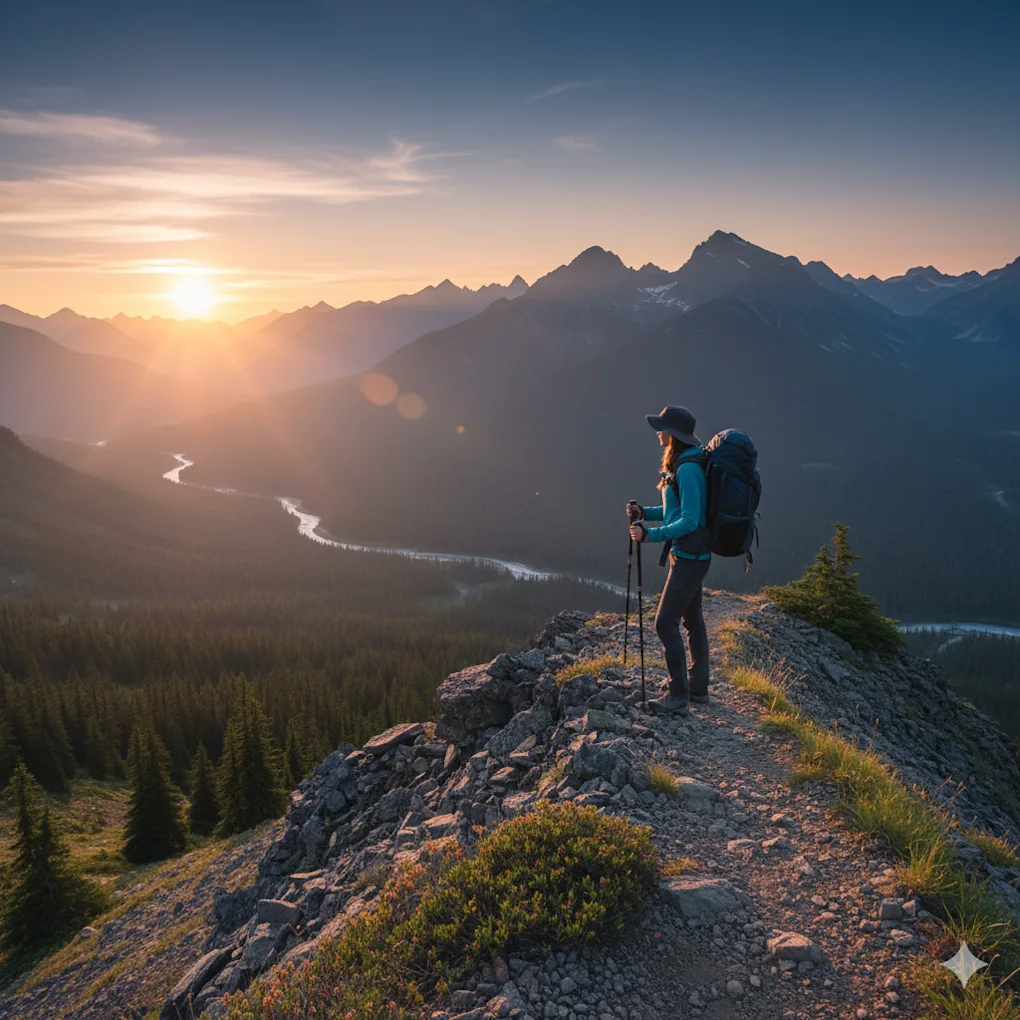
Hiking in Jackson, WY: Trails, Tips & Teton Adventures
The Complete Guide to Teton Trail Adventures
Planning your next hiking adventure doesn't have to be overwhelming, especially when you're exploring one of America's most iconic mountain destinations. Jackson, Wyoming, positioned at the base of the dramatic Teton Range at 6,237 feet elevation, offers hiking experiences that range from gentle valley floor walks perfect for families to technical alpine routes requiring mountaineering skills and summit experience.

Here's what makes Jackson extraordinary for hiking: you're positioned in a valley where Grand Teton National Park provides over 200 miles of maintained trails, the surrounding Bridger-Teton and Caribou-Targhee National Forests offer hundreds of additional miles, and elevation ranges from 6,200 feet in Jackson to 13,775 feet atop the Grand Teton create diverse ecosystems and experiences. Whether you're looking for easy lakeside strolls with mountain reflections, moderate day hikes to alpine lakes and waterfalls, challenging peak ascents testing your endurance, or multi-day backpacking expeditions through wilderness, this guide will help you choose the perfect Teton adventure.

With access to iconic trails like Cascade Canyon beneath towering peaks, alpine lakes reflecting the Cathedral Group, wildflower meadows exploding with color in July, technical peaks attracting mountaineers worldwide, and wildlife viewing opportunities including moose, bears, and elk, Jackson serves as the ultimate mountain hiking destination. The region's well-maintained trail system, professional guide services, and spectacular scenery create ideal conditions for hikers of all levels while maintaining genuine wilderness character.
GETTING STARTED: Valley and Lake Trails
Easy Introduction Trails
If you're new to mountain hiking or adjusting to elevation, Jackson and Grand Teton National Park offer gentle trails providing spectacular scenery without technical challenges or extreme exertion. These routes allow acclimatization while showcasing why millions visit the Tetons annually.
Jenny Lake Loop Trail (7.6 miles, mostly flat) circles Jenny Lake with constantly changing perspectives of the Teton Range. The paved and well-maintained trail provides:
Level terrain suitable for all fitness levels
Spectacular mountain views from every angle
Access to String Lake connection
Options to shorten via Jenny Lake boat shuttle ($20 round trip)
Wheelchair accessible sections on east shore
The loop works perfectly for first-day acclimatization, allowing your body to adjust to 6,800-foot elevation while enjoying world-class scenery. Morning hiking (6:00-9:00 AM) provides best lighting, fewer crowds, and potential wildlife sightings.
Here's a pro tip: Start at String Lake and hike counter-clockwise. This direction provides optimal views of Mount Moran rising directly above the lake while avoiding the crowds concentrated on the east shore near visitor facilities. The west shore trail is quieter and more intimate despite slightly rougher tread.

Schwabacher Landing (1 mile round trip, flat) provides the Tetons' most famous photography location with minimal hiking. This short walk along a Snake River oxbow creates:
Perfect reflections of the Teton Range in calm morning water
Beaver dams and ponds
Moose habitat (frequent sightings)
Minimal exertion for maximum scenery
Sunrise photography destination
The trail demonstrates that Jackson hiking isn't always about logging miles—sometimes the best experiences come from being in the right place at the right time with patience to observe.
Taggart Lake Trail (3.1 miles round trip, 360 feet elevation gain) introduces moderate mountain hiking without overwhelming beginners. The trail climbs gently through forest burned in the 1985 wildfire (showing forest succession and regeneration) before emerging at Taggart Lake with the Cathedral Group as backdrop.
This trail teaches fundamental mountain hiking concepts:
Sustained but manageable uphill effort
Basic trail navigation at intersections
Afternoon thunderstorm timing awareness
Wildlife awareness (moose frequent this area)
Leave No Trace principles
Moderate Valley Hikes
Phelps Lake Overlook (3.8 miles round trip, 640 feet elevation gain) rewards with spectacular aerial views of turquoise Phelps Lake 700 feet below, Death Canyon cutting into the Tetons, and surrounding mountain peaks. The trail climbs steadily through Douglas fir forest before emerging at a dramatic overlook.
This hike transitions hikers from easy to moderate difficulty while introducing:
Sustained uphill hiking requiring cardiovascular fitness
Higher elevation (starting 6,800 feet, reaching 7,440 feet)
Exposed overlook requiring caution
Potential for afternoon storms
Longer time commitment (2.5-3.5 hours round trip)
Two Ocean Lake Loop (6.2 miles, minimal elevation gain) circumnavigates a beautiful lake northeast of Jackson with constant Teton views and excellent wildlife habitat. The trail remains relatively flat but requires 3-4 hours of sustained walking at 6,900 feet elevation.
Benefits of this less-crowded trail:
Solitude compared to popular park trails
Prime moose habitat (bring binoculars)
Wildflowers in July
Morning fog creating mystical atmosphere
Good trail for acclimatization before harder hikes
ALPINE LAKES AND CANYONS: Classic Teton Day Hikes

Cascade Canyon: The Signature Teton Experience
Cascade Canyon Trail represents Grand Teton's most accessible alpine canyon, providing progressive hiking from easy lakeside walking to challenging high alpine terrain. Multiple turnaround options allow customization based on fitness and time.
Hidden Falls and Inspiration Point (2 miles round trip from Jenny Lake boat shuttle, 400 feet elevation gain) provides the minimum Cascade Canyon experience:
200-foot Hidden Falls cascading over cliffs
Inspiration Point overlooking Jenny Lake and Jackson valley
Relatively easy effort with boat shuttle eliminating 4-mile lakeshore walk
Perfect for families and time-limited visitors
2-3 hours total including boat ride
Cascade Canyon to Forks (9.2 miles round trip from boat shuttle, 1,000 feet elevation gain) extends into the heart of the canyon with increasingly dramatic scenery:
Classic U-shaped glacial canyon with peaks rising 5,000+ feet on both sides
Progressive wildflower displays through July
Multiple creek crossings and cascades
Moose sightings common
5-7 hours round trip
The trail to the forks maintains moderate grades suitable for most fit hikers while delivering world-class alpine scenery. This is the "classic" Teton day hike balancing accessibility with genuine mountain character.
Lake Solitude (14.4 miles round trip from boat shuttle, 2,660 feet elevation gain) extends beyond the forks into serious alpine terrain:
Spectacular turquoise alpine lake at 9,035 feet
Paintbrush Divide visible above (technical hiking beyond lake)
True wilderness feel despite maintained trail
Full-day commitment (8-10 hours minimum)
High-elevation altitude effects
Lake Solitude represents the transition from moderate to challenging hiking. The sustained distance, elevation gain, and high altitude require solid fitness and mountain experience.

Other Premier Alpine Lake Trails
Amphitheater and Surprise Lakes (10 miles round trip, 3,000 feet elevation gain) climbs steeply from Lupine Meadows trailhead to two stunning alpine lakes:
Relentless sustained climbing (one of park's steepest maintained trails)
Amphitheater Lake at 9,698 feet with Grand Teton towering directly above
Surprise Lake just beyond
Outstanding wildflowers in July
6-8 hours for strong hikers
This trail builds serious leg strength and cardiovascular fitness while testing your tolerance for sustained uphill. The rewards—lakes directly beneath the Cathedral Group—justify the suffering.
Delta Lake (7.6 miles round trip, 2,300 feet elevation gain) climbs to a spectacular turquoise lake tucked into a cirque beneath the Grand Teton:
Steep, unmaintained trail requiring route-finding
Loose scree and rock scrambling sections
Stunning lake with icebergs floating into summer
Grand Teton's north face rising directly above
5-7 hours round trip
Delta Lake exists in the grey area between maintained hiking and mountaineering. The steep, rough trail requires comfort with exposure and loose rock while delivering some of the park's most dramatic alpine scenery.
Static Peak Divide (16 miles round trip, 3,400 feet elevation gain) reaches an 11,000-foot divide with 360-degree views:
Extension beyond Death Canyon
Extremely long day requiring dawn start
Alpine tundra environment
Potential snow into July
For experienced, fit hikers only
Death Canyon and Alaska Basin
Death Canyon Patrol Cabin (7.4 miles round trip, 720 feet elevation gain) provides moderate canyon hiking with less traffic than Cascade:
Historic patrol cabin at canyon junction
Similar glacially-carved canyon character
Excellent moose habitat
Good turnaround for moderate hikers
Alaska Basin (20+ miles, 5,000+ feet elevation gain) accesses some of the Tetons' most remote and beautiful alpine terrain:
Typically done as overnight backpacking trip
Multiple alpine lakes and wildflower basins
Requires backcountry camping permit
Serious undertaking even for experienced hikers
CHALLENGING PEAKS AND ALPINE ROUTES
Non-Technical Peak Hiking
Table Mountain (Idaho) (12 miles round trip, 4,000 feet elevation gain to 11,106 feet summit): Accessed from Teton Canyon on the Idaho side (45-minute drive from Jackson), Table Mountain provides the Tetons' best non-technical summit experience:
Why Table Mountain is exceptional:
Face-to-face with Grand Teton's west face
True summit experience without technical climbing
360-degree views of Idaho, Wyoming, Yellowstone
Wildflower-filled approach through Table Mountain cirque
Achievable for fit hikers without mountaineering skills
The reality:
Extremely steep sustained climbing (4,000 feet in 6 miles)
High altitude effects above 10,000 feet
Loose scree and rock scrambling near summit
Weather exposure above treeline
Full-day commitment (8-10 hours)
Table Mountain separates hikers who occasionally walk trails from serious mountain enthusiasts. The combination of distance, elevation gain, altitude, and steepness requires substantial fitness and mental toughness.
Albright Peak (10 miles round trip, 3,500 feet elevation gain to 11,590 feet) provides another summit option from Death Canyon:
Technical route-finding through boulder fields
Spectacular views of Death Canyon and surrounding peaks
Less-traveled than Table Mountain
Requires comfort with exposure and loose rock
The Teton Crest Trail
Teton Crest Trail (40+ miles, typically 3-5 days) traverses the Teton Range's high country connecting alpine basins and passes:
Classic North-to-South Route:
Start: String Lake or Leigh Lake
Paintbrush Divide (10,700 feet)
Cascade camping zones
Hurricane Pass (10,372 feet)
Alaska Basin
Death Canyon
End: Teton Village tram
The Teton Crest represents one of America's premier backpacking routes with sustained high-elevation travel through spectacular alpine terrain. Multiple variations exist, but all require:
Backcountry camping permits (competitive, reserve early)
Comfort with sustained elevation (mostly above 9,000 feet)
Multi-day food and gear carrying
Snow travel skills for early season
Navigation abilities
Self-sufficiency
Technical Mountain Climbing
Grand Teton (13,775 feet) attracts climbers worldwide but is NOT a hiking destination:
Technical rock climbing (Class 5.4-5.8 depending on route)
Mountaineering skills mandatory (rope work, exposure comfort, glacier travel)
Guided climbs: $1,200-1,500 for 2-day Exum Ridge route
Multiple deaths annually from falls, storms, altitude
Requires extensive preparation and experience
Middle Teton (12,804 feet) and South Teton (12,514 feet) offer slightly less technical climbing but still require mountaineering skills, not just hiking.
Jackson's iconic peaks attract hikers beyond their abilities. Recognize the difference between hiking and mountaineering—technical peaks require training, equipment, and guided services or extensive experience.
SEASONAL HIKING AND TIMING
Spring Season (May-June)
Lower Elevation Access: Spring snowmelt opens valley and lake trails (6,500-7,500 feet) while higher elevations remain snowbound:
Jenny Lake Loop, Taggart Lake: Usually clear by early May
Phelps Lake Overlook: Clear by mid-May
Cascade Canyon to forks: Clear by early June
Spring Advantages:
Waterfalls at peak flow from snowmelt
Wildflowers starting at lower elevations
Fewer crowds than peak summer
Cooler temperatures for uphill hiking
Active wildlife (bears emerging, moose with calves)
Spring Challenges:
Afternoon thunderstorms common
Mosquitoes intense in June
Snow on high trails through June
Unpredictable weather
Bear activity high (proper food storage critical)
Summer Prime Season (July-August)
Peak Access and Conditions: July and August provide access to nearly all trails with optimal conditions:
All maintained trails clear of snow by early July
Warmest temperatures (70-80°F in valleys, 50-60°F at altitude)
Longest daylight (sunrise 5:30 AM, sunset 9:00 PM)
Wildflowers peak in alpine zones
Stable weather patterns (though afternoon storms remain common)
Summer Challenges:
Extreme crowds on popular trails (Hidden Falls, Jenny Lake, Cascade)
Afternoon thunderstorm risks above treeline
Intense sun at altitude requiring protection
Higher temperatures making uphill efforts more difficult
Tourist crowds affecting parking and trail experience
Optimal Summer Strategy:
Start hikes by 6:00-7:00 AM (beat crowds, best light, avoid afternoon storms)
Target weekdays over weekends
Consider less-popular trails (Two Ocean Lake, Death Canyon vs. Cascade)
Plan afternoon below-treeline activities if storms develop
Book overnight permits months in advance
Fall Excellence (September-October)
September - Prime Hiking: September offers Jackson's best overall hiking conditions:
Comfortable temperatures (60-70°F valleys, 40-50°F mountains)
Dramatically reduced crowds after Labor Day
Fall colors (aspens peak late September)
Stable weather patterns
Clear visibility for photography
Elk rut creating spectacular wildlife viewing
September balances summer access with fall benefits—trails remain clear while conditions improve and crowds disappear.
October - Season Closure: October transitions from hiking to winter:
Snow begins at high elevations (9,000+ feet) by mid-month
Lower trails (7,000-8,000 feet) remain accessible
Very few visitors
Cold nights (20-30°F)
Shorter daylight
Most facilities closed by month's end
Winter and Spring Closure
November through April, most Jackson-area trails become snowshoe or ski routes rather than hiking destinations. The Grand Teton National Park inner road closes (Moose to Signal Mountain), limiting access. Winter is for skiing, not hiking in the Tetons.
ALTITUDE AND ACCLIMATIZATION
Understanding Elevation Effects
Altitude Reality: Jackson sits at 6,237 feet—higher than most visitors' home elevations. Trailheads range from 6,800-8,000 feet, with trails reaching 9,000-11,000+ feet. This elevation affects everyone:
Mild Altitude Effects (6,000-8,000 feet):
Increased breathing rate and heart rate
Mild fatigue during exertion
Slight dehydration (dry mountain air)
Most people adjust within 1-2 days
Moderate Altitude Effects (8,000-10,000 feet):
Noticeable shortness of breath
Reduced physical performance (20-30% decrease)
Headache potential
Sleep disturbance first night or two
Adjustment requires 2-3 days
High Altitude Effects (10,000+ feet):
Significant breathing difficulty during exertion
Performance decreased 30-50%
Headache, nausea, dizziness possible
Acute Mountain Sickness (AMS) risk
Proper acclimatization essential
Acclimatization Strategy
Day 1 - Arrival:
Easy valley hiking only (Jenny Lake Loop, Schwabacher Landing)
Hydrate aggressively (3-4 liters water)
Avoid alcohol first night
Light meals, early sleep
Day 2 - Moderate Elevation:
Moderate hikes to 8,000-8,500 feet (Phelps Overlook, Taggart Lake)
Monitor for headache or unusual fatigue
Continue aggressive hydration
Avoid pushing through significant discomfort
Day 3+ - Progressive Challenges:
Increase elevation and effort if feeling good
Target high-elevation trails (Cascade Canyon, Amphitheater Lake)
Turn back if altitude symptoms develop
Warning Signs of Altitude Sickness:
Persistent headache not relieved by water and rest
Nausea or vomiting
Extreme fatigue or weakness
Dizziness or lightheadedness
Confusion or difficulty thinking
Response: Descend immediately if symptoms are moderate or severe. Altitude sickness can progress to life-threatening conditions (HAPE, HACE) if ignored.
WILDLIFE SAFETY AND AWARENESS
Bear Safety in the Tetons
Bear Reality: Grand Teton National Park and surrounding areas host both black bears (~60-100 in park) and grizzly bears (~10-20 in park, more in surrounding wilderness). Bear encounters happen regularly—proper protocols prevent problems.
Prevention Strategies:
Make noise: Talk, clap, sing on blind corners and dense vegetation
Hike in groups: Groups of 3+ have virtually no dangerous encounters
Proper food storage: Never leave food or scented items unattended
Stay alert: Watch for scat, tracks, diggings; avoid carcass sites
Time awareness: Dawn and dusk are peak bear activity
Carrying Bear Spray:
Counter Assault or UDAP brands (8+ oz canisters)
Holster on hip belt, immediately accessible
Know how to use it BEFORE hiking (practice with inert trainer)
Effective range: 15-30 feet
Not a repellent—only use during actual charge
Bear Encounter Protocol:
See bear at distance: Detour around giving 100+ yard space, or wait for bear to leave
Bear sees you but not approaching: Talk calmly, wave arms, back away slowly
Bear approaching/bluff charging: Stand ground, ready spray, talk firmly
Bear making contact: Fight back if black bear; play dead if grizzly (on stomach, hands behind neck)
Reality Check: Most bear encounters end with the bear leaving. Attacks are rare but do occur—proper preparation and response protocols prevent tragedies.
Moose Encounters
Moose Dangers: Moose injure more people in Jackson than bears. These 800-1,200 pound animals are unpredictable, especially:
Cows with calves (late spring/early summer)
Bulls during rut (September-October)
Any moose when approached too closely
Safe Moose Viewing:
Maintain 25+ yard minimum distance
Never position yourself between cow and calf
If moose shows aggression signs (ears back, hackles raised, stomping), back away immediately
Put trees or large objects between you and moose
Be especially cautious in willows and wetlands
If Moose Charges:
Run and get behind solid trees or large rocks
Moose rarely pursue far if you leave their space
Unlike bears, running from moose is appropriate
Other Wildlife
Elk:
Generally avoid humans
Bulls dangerous during rut (September-October)
Maintain 25+ yards
Never approach calves
Bison:
Present in some areas near Grand Teton
Extremely dangerous (kill more people than any other North American mammal)
Minimum 25 yards, better 50+ yards
Can sprint 35 mph—faster than humans
Snakes:
Rare above 7,000 feet
Prairie rattlesnakes at lower elevations
Watch where you place hands and feet
Give wide berth if encountered
TRAIL ETIQUETTE AND LEAVE NO TRACE
Sharing Trails Responsibly
Right of Way:
Uphill hikers have right of way (descending is easier to stop)
Mountain bikers yield to hikers (bikes restricted to limited trails)
Horses have right of way (step off trail on downhill side, talk calmly)
Larger groups yield to smaller
Trail Courtesy:
Step aside to allow faster hikers to pass
Keep noise reasonable (not a library, but not blasting music)
Don't block trails for extended photography
Control children and pets
Share summits and viewpoints gracefully
Leave No Trace Principles
Principle 1 - Plan Ahead and Prepare:
Research trail conditions and difficulty
Check weather forecasts
Bring appropriate equipment
Know your abilities honestly
Principle 2 - Travel on Durable Surfaces:
Stay on maintained trails (shortcutting causes erosion)
Walk through mud rather than widening trails around it
Use rocks for stream crossings where possible
Camp in designated sites for overnight trips
Principle 3 - Dispose of Waste Properly:
Pack out ALL trash (including orange peels, food scraps)
Bury human waste 6-8 inches deep, 200+ feet from water/trails
Pack out toilet paper or bury deeply
Use toilets at trailheads when available
Principle 4 - Leave What You Find:
Don't collect rocks, antlers, flowers, or other natural objects
Leave structures and artifacts undisturbed
Avoid damaging trees and plants
Principle 5 - Minimize Campfire Impacts:
Fires prohibited in most Grand Teton backcountry
Use camp stoves for cooking
If fires allowed, use established rings only
Principle 6 - Respect Wildlife:
Observe from distance (see wildlife safety section)
Never feed animals
Store food properly
Don't pursue for photos
Principle 7 - Be Considerate:
Respect other visitors' experience
Let natural sounds prevail
Be courteous
Mind trail etiquette
GUIDED HIKING AND INSTRUCTION
Professional Guide Services
Jackson Hole Mountain Guides: Offers comprehensive hiking and climbing programs:
Half-day guided hikes: $150-200 per person
Full-day hikes: $300-400 per person
Multi-day backpacking trips: Custom pricing
Technical climbing instruction and guiding
Private and group options
The Hole Hiking Experience: Specializes in naturalist-guided hiking:
Four-hour wildlife hikes: $125 per person
Full-day Teton hikes: $200-250 per person
Wildflower and photography-focused trips
All equipment provided (daypacks, trekking poles, bear spray)
Natural history interpretation
Benefits of Guided Hiking:
Local knowledge of conditions and routes
Wildlife identification and interpretation
Safety oversight and emergency response
Equipment provision
Social experience with other hikers
Learning opportunities
When to Consider Guides:
First time in serious mountains
Wanting natural history education
Solo traveler seeking company
Uncertain about route-finding
Wanting safety oversight in bear country
Hiking Clubs and Group Opportunities
Teton Hiking Club: Local organization leading group hikes:
Weekend day hikes (various difficulties)
Social hiking community
Free to join group hikes
Meet other local hikers
Park Ranger Programs: Grand Teton National Park offers:
Ranger-led hikes (free)
Evening programs at visitor centers
Junior Ranger programs for kids
Natural history talks
PRACTICAL PLANNING AND LOGISTICS
Essential Hiking Gear
The Ten Essentials (adapted for Tetons):
Navigation: Trail map, compass, GPS device
Sun protection: Sunglasses, sunscreen (SPF 30+), hat
Insulation: Extra layers (weather changes rapidly)
Illumination: Headlamp with extra batteries
First aid: Wilderness-appropriate kit
Fire: Waterproof matches/lighter, fire starter
Repair kit: Duct tape, cord, knife/multi-tool
Nutrition: Extra high-calorie food
Hydration: Water plus treatment (filter or tablets)
Emergency shelter: Space blanket or bivy sack
Teton-Specific Additions:
Bear spray (holstered and accessible)
Trekking poles (reduce knee stress on steep descents)
Gaiters (protection from snow, water, debris)
Insulating hat and gloves (even in summer at altitude)
Rain gear (afternoon storms common)
Clothing and Layering
Base Layer:
Synthetic or merino wool (NOT cotton)
Wicks moisture from skin
T-shirt or long-sleeve depending on season
Insulation Layer:
Fleece or light puffy jacket
Adjustable based on exertion and elevation
Essential even on warm days (temperatures drop with elevation)
Shell Layer:
Waterproof/breathable jacket
Wind protection
Critical for afternoon storms
Lower Body:
Hiking pants or shorts
Long pants recommended (sun protection, brush, changing weather)
Gaiters for snow or muddy conditions
Footwear:
Hiking boots with ankle support (recommended for rocky terrain)
OR trail runners (lighter but less support/protection)
Broken in BEFORE trip (blisters ruin hikes)
Wool or synthetic socks (extra pair in pack)
Don't Forget:
Hat for sun protection
Warm beanie (for higher elevations)
Gloves (yes, even in July at 10,000+ feet)
Permits and Regulations
Day Hiking:
Grand Teton National Park entrance: $35 per vehicle (7-day pass)
No additional permits required for day hiking
Annual pass: $70 (valid all national parks)
Overnight Backpacking:
Backcountry camping permit required: $45 (up to 6 people)
Reservations open January 1 for upcoming summer (recreation.gov)
Competitive for popular zones (Cascade, Alaska Basin)
Bear canisters required for food storage
Designated campsites only
Regulations:
Pets prohibited on all Grand Teton trails
Drones prohibited
Collecting prohibited (rocks, plants, antlers, etc.)
Fishing requires Wyoming license
Campfires prohibited in most backcountry areas
Transportation and Parking
Trailhead Access: Most trailheads accessed via:
Teton Park Road (Moose to Jenny Lake)
Moose-Wilson Road (Death Canyon, Granite Canyon)
Jenny Lake area (most popular, fills by 8:00 AM in summer)
String Lake (alternative parking, less crowded)
Parking Strategy:
Arrive before 7:00 AM for summer weekend parking
Use shuttle services or car pool when possible
Jenny Lake Visitor Center has largest lot (still fills)
Overflow parking at Taggart Lake can add miles
Shuttles and Services:
Jenny Lake boat shuttle: Crosses lake saving 4 miles ($20 round trip)
Limited shuttle services from Jackson to trailheads
Most visitors need vehicles
SAMPLE ITINERARIES
3-Day First-Timer Itinerary
Day 1 - Acclimatization:
Morning: Jenny Lake Loop (east shore to String Lake)
Afternoon: Explore Moose visitor center, rest
Evening: Sunset at Schwabacher Landing
Day 2 - Moderate Challenge:
Morning: Taggart Lake and Bradley Lake loop (5 miles)
Afternoon: Short rest, gear prep
Evening: Jackson town exploration
Day 3 - Signature Hike:
Early start (6:30 AM): Cascade Canyon via Jenny Lake boat
Hike to Forks or Lake Solitude depending on fitness
Return mid-afternoon before storms
Week-Long Comprehensive Experience
Day 1: Jenny Lake Loop, acclimatization Day 2: Phelps Lake Overlook and Death Canyon patrol cabin Day 3: Rest day or easy hike (Two Ocean Lake) Day 4: Cascade Canyon to Lake Solitude (long day) Day 5: Table Mountain summit attempt (Idaho side) Day 6: Amphitheater Lake (if legs recovered) Day 7: Easy morning, travel day
Backpacking 4-Day Teton Crest
Day 1: String Lake to Holly Lake camping zone (7 miles, 3,400' gain) Day 2: Paintbrush Divide to North Fork Cascade camping zone (8 miles, 1,500' gain) Day 3: Hurricane Pass to Alaska Basin camping (9 miles, 2,000' gain) Day 4: Exit via Death Canyon to trailhead (10 miles, descending)
BEYOND HIKING: Jackson Summer Activities
Complementary Adventures
Rock Climbing:
Teton peaks for technical mountaineers
Blacktail Butte sport climbing
Jenny Lake bouldering
Guide services available
Mountain Biking:
Cache Creek trail system
Limited options in Grand Teton National Park (bikes restricted)
Bridger-Teton National Forest trails
Water Activities:
Snake River floating
Lake kayaking (Jenny, Jackson, Leigh)
Fly fishing
Wildlife Viewing:
Oxbow Bend (moose, birds)
Antelope Flats (pronghorn, bison)
Willow Flats (moose)
Rainy Day and Rest Day Options
Museums and Culture:
National Museum of Wildlife Art
Jackson town square
Million Dollar Cowboy Bar
Local art galleries
Scenic Drives:
Signal Mountain summit road
Antelope Flats loop
Moose-Wilson Road
Teton Pass to Idaho
Recovery Activities:
Hot springs at Granite Creek (drive + hike)
Massage and spa services in Jackson
Brewery tours
Western rodeos (summer evenings)
CONCLUSION: Your Teton Hiking Adventure
Jackson, Wyoming, and Grand Teton National Park provide hiking experiences unmatched in accessibility, scenery, and diversity. From gentle lakeside strolls suitable for families to technical peak climbs testing experienced mountaineers, the Tetons deliver authentic mountain adventures with infrastructure supporting safe exploration.